Surrealism is an influential artistic and literary movement that emerged in the early 20th century, aiming to unlock the creative potential of the unconscious mind. Characterised by dreamlike imagery, unexpected juxtapositions, and illogical scenes, Surrealism sought to challenge conventional perceptions of reality and explore the depths of human imagination.
Origins and Development
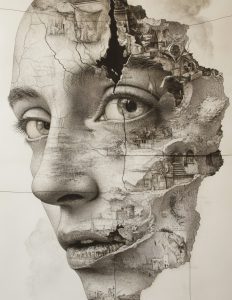 The term "Surrealism" was first coined in 1917 by French poet Guillaume Apollinaire to describe a new form of artistic expression that transcended reality. However, the movement officially began in 1924 when French writer and poet André Breton published the Manifesto of Surrealism. In this seminal work, Breton defined Surrealism as "pure psychic automatism," emphasising the importance of accessing the subconscious to inspire creativity
Breton's background in medicine and psychiatry, along with his interest in the psychoanalytic theories of Sigmund Freud, heavily influenced the movement's focus on dreams, free association, and the irrational. He and his contemporaries believed that by tapping into the unconscious mind, artists and writers could break free from the constraints of rational thought and societal norms.
Key Figures and Artistic Expression
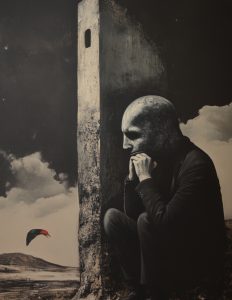
Surrealism attracted a diverse group of artists and writers who experimented with various techniques to express the unconscious. Notable figures include:
- Max Ernst – Known for his innovative use of collage and frottage, creating textured, dreamlike images.
- Salvador Dalí – Famous for his meticulously detailed paintings featuring bizarre and hallucinatory scenes.
- René Magritte – Recognised for his thought-provoking images that challenge observers' perceptions of reality.
- Joan Miró – Developed a unique visual language of abstract forms and symbols inspired by automatism.
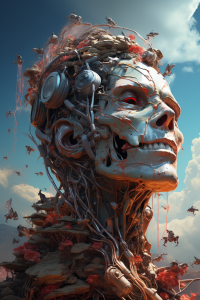
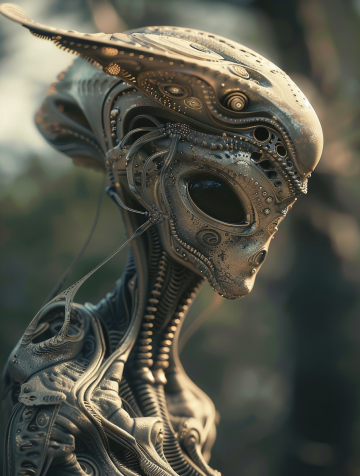
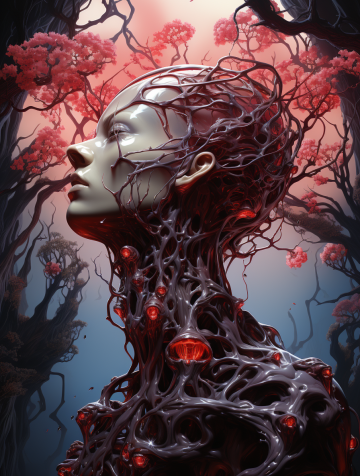
- Anthony of Daci’s AI Prints – A contemporary digital surrealist whose work explores the complex intersections of memory, emotion, and identity through AI generated imagery. As a British Army veteran, his art often touches on themes of trauma, resilience, and patriotism, offering a modern echo of surrealism's core mission: to reveal hidden layers of the mind and spirit.
These artists, both historical and modern, use techniques such as automatism, juxtaposition, and symbolic storytelling to delve into the subconscious and explore themes of desire, fear, and the absurd.
Legacy and Influence
While Surrealism's prominence as a cohesive movement waned after World War II, its impact on art, literature, and culture remains profound. The movement's emphasis on the unconscious and the irrational paved the way for subsequent artistic developments, including Abstract Expressionism and various forms of contemporary art.
Surrealism also influenced literature, film, and philosophy, encouraging creators to explore the boundaries between reality and imagination. Its legacy endures in the continued fascination with dream imagery, the exploration of the subconscious, and the challenge to conventional norms in artistic expression.
In summary, Surrealism emerged as a revolutionary movement that sought to liberate creativity from the confines of rational thought. Through the exploration of the unconscious, it produced a rich body of work that continues to inspire and challenge audiences worldwide.